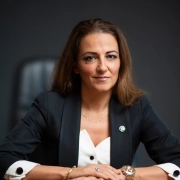
Interview with Claire Zammit Xuereb: Insights on Business, Leadership, and Passion

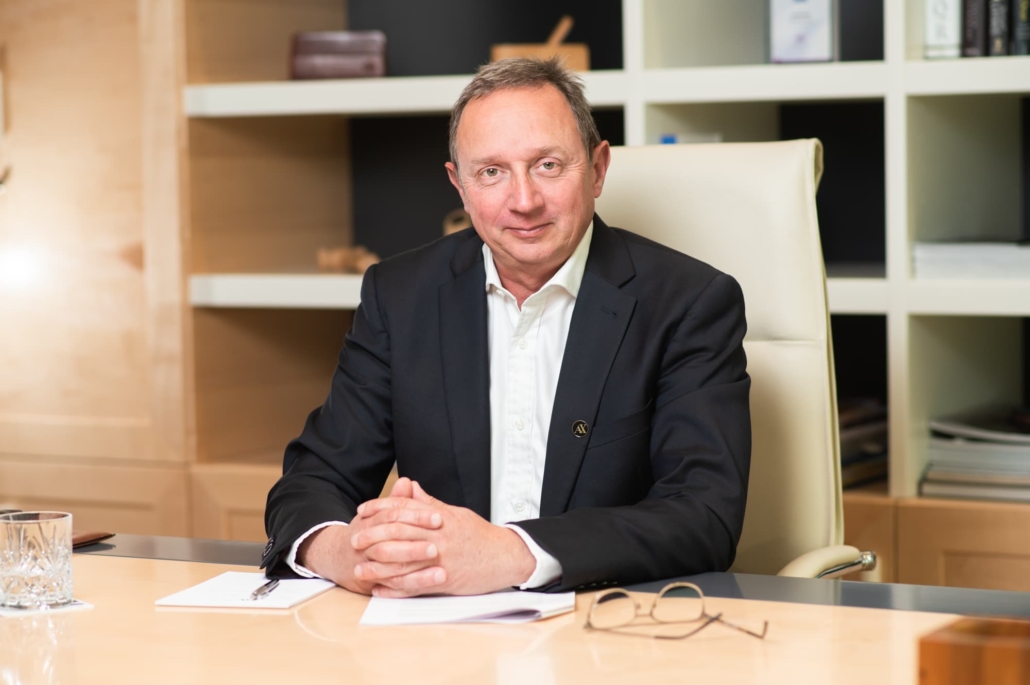
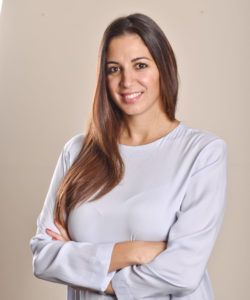
Ms. Claire Zammit Xuereb, Director of Hospitality and Care at AX Group, is a dynamic individual, both personally and professionally. Having a passion for living life to the fullest, drives her to push her own boundaries and inspire others to do the same. 

The Role of Passion in Business 

Claire emphasises that running a business demands unwavering passion and resilience. “If you don’t feel a great passion to get there, business is not for you” she asserts. Obstacles are merely opportunities in disguise. 

Leadership Philosophy 

Claire believes leadership is both an innate quality and a skill that can be cultivated. For her, effective leadership involves setting a clear vision and guiding others towards it. “Leadership is about resilience, leading by example, and motivating your people,” she explains, adding that leadership requires constant effort and maintaining high standards. 

Innovative Leadership Style 

Rather than relying on external sources for inspiration, Claire prefers to generate ideas from within. She is keenly attuned to market gaps, designing businesses to fill these voids authentically. “I hate copy-paste. A business plan needs to be original, add value, and have a competitive edge,” she says. 

Employee Motivation and Client Relations 

Motivating employees, is challenging but essential. Claire stresses the importance of direct and indirect communication, leading by example, and keeping employees engaged with the company’s future. Regular meetings facilitate this dialogue, allowing employees to align themselves with the company’s growth. 

Claire views client feedback as invaluable, using it to continually improve the business. “Client feedback is the most important thing we can have. It’s how we build for the future,” she notes. 

The Focus on Quality 

Quality is the cornerstone of AX Group’s philosophy. Claire insists that everything the group does must add value and raise the bar, with a focus on long-term success rather than short-term gains. This principle continues to guide the company’s operations. 

Competition and Long-Term Goals 

Claire takes a long-term view when it comes to competition and warns against the pitfalls of short-term thinking, noting that many businesses fail because they enter markets unprepared. “If you can’t see the end goal clearly, it’s not worth pursuing,” she advises. 

The Secret to Success 

For Claire, the key to sustaining a business across generations lies in good governance, planning, and adhering to well-established systems. These principles ensure the business can weather challenges and continue to thrive. 

Advice for Aspiring Entrepreneurs 

Claire admires those with the courage to start their own businesses but cautions that it requires immense sacrifice and resilience. For those who are committed, the rewards are well-worth the effort. She sums up her approach with a vivid metaphor: “If you don’t go through the door, go through the window. And if that doesn’t work, break down the wall.” 

In conclusion, Claire Zammit Xuereb’s insights offer a compelling look at what it takes to succeed in business: passion, resilience, and a commitment to quality and authenticity. 

View the full interview here: https://www.youtube.com/watch?v=kPdjz6G8H0w 
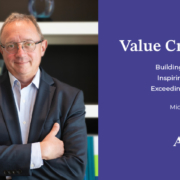
Value Creation

Value Creation is the term that defines how the organisation of a business’ resources, both tangible and intangible create value for stakeholders in such a way that the outputs exceed the inputs. Value Creation goes beyond profit.  It is about fostering stronger customer relationships, driving innovation and interacting positively with communities and the environment.

In financial accounting terms we look at shareholder value by measuring the changes in “shareholder’s equity” and “profitability”.

Stakeholder value goes beyond this because it recognises assets such as brands, knowhow, reputation, the knowledge held by employees, corporate strategy and how these effect and translate into value for a broad range of stakeholders including customers, owners, employees, regulators, suppliers, financial backers, communities and the environment.

A comprehensive picture of Value Creation requires alignment between many factors including business practices, tangible and intangible assets, material financial and non-financial capital risks, the corporate strategy, its engagement with multiple stakeholders, sustainability and governance.

How have we at AX embraced key elements in our Value Creation process.

We recognise that value is created through our business model and the manner in which we manage and deploy our capital.   We define our capital in a broad sense.  It goes beyond our equity and includes.

  1. Our reputation
  2. Our property developments and their associated business models
  3. Our core values
  4. Our intellectual property
  5. Our brands
  6. Our employees
  7. Our commitment to sustainable practices
  8. Our commitment to the environment
  9. Our strong spirit of Innovation
  10. Our Financial performance

All of these factors are interdependent and result from a thinking organisation that values its relationships with all its stakeholders.

As a business we recognise that we have strong interactions within the communities where we operate.   We understand that commercial activity has an impact on these communities not just in the visual aspects of our developments but also in the functionality of these activities.

In doing so we have set “building communities” as a core principle and value for the Group.  Our concept of development goes beyond simply building nice properties.  We strive to optimise the relationship of those properties within their physical context,  giving importance to a broad range of factors, their impact on the surrounding properties, traffic and people movement within and around the development, preserving key elements such as natural light and vistas, serviceability of the property etc.

Our current development at Verdala has replaced the old hotel with three individual blocks.  Two of these blocks are designed for residential use and one will be a hotel.  The old Verdala hotel had 200 guest suites and was visually intrusive on the Rabat ridge.  In redesigning the new development we have lowered the building height, broken up the building mass into three elements rather than one very large block, extended the street scape in between the two most prominent blocks so as to create vistas from the road to the ridge which previously was blocked by the old hotel, factored into the development extensive parking to minimise parking and traffic congestion, created piazza to form a central open space within the property and designed a much smaller hotel that will materially reduce the traffic impact within the area.

Our Hilltop Gardens Retirement Village was developed on the site of the AX Group’s former construction yard out of which the Construction company operated for many years.  Following the redevelopment of the site, we created a tranquil residential development.  We built just 55% of the site in order to create the right environment for the residents of the Complex.  We incorporated open spaces to ensure good light, ventilation, vistas and used some of the area for gardens and recreational facilities.  The operating business model of the Retirement Village and Care Home focus on Community through social and cultural activities thus creating a thriving and secure community.

The AX Group’s business model is a customer centric approach.  We believe in delivering value to our customers, enhancing loyalty and customer satisfaction, building strong brands, embracing innovation and technology to deliver our products and services as well as to enhance efficiency and cost management.

The AX Group has long had a strong presence on the Malta Stock Exchange and this has created a culture of accountability and strong governance within the Group.

Our reputation within our communities is valued and is reflected in the manner in which shareholders take up our financing instruments whenever we approach the market.

We have developed over 40 brands many of which are recognised as market leaders.

As an employer we strive to be an “Employer of Choice”.   This with a view to attracting the best talent, creating a positive work culture, retaining knowledge within the businesses, working in the multi-cultural realities and the opportunities this brings, minimising employee turnover, and optimising productivity.

It is the management of all these elements and objectives that have created the positive and strong business that is today’s AX Group.

The AX Group’s ESG journey (this far)

Businesses exist primarily for profit.  Other organisations may have different objectives and these include Government, Foundations, Charities and others.

There is no doubt that climate change is a reality.  We see it and experience it every day.  Longer summers, hotter summers, sudden unexpected downpours.  Nature is struggling to cope with this.  Trees and plants are not growing as healthily as we know they did in the past.     We can close our thoughts to these changes because we believe that there is little we can do individually and the prime responsibility surely must fall on Governments and large businesses.  Realistically we do know that each and every one of us have the responsibility to do whatever is within our ability to mitigate climate change.

At AX Group our ESG journey started with defining our vision. The vision is “we want to be active in managing our ESG responsibilities, selecting actions and identifying opportunities and objectives that have a  positive outcome to minimise climate change”.  In the realisation that we can do much more if we align ourselves with likeminded businesses, and conscious that Government has a significantly greater ability to foster policies that protect the environment, we became founder members of Malta’s ESG alliance.

Let us start with short term action we have taken, mostly the low hanging actions which are within our reach.

The reduction of waste, the separation of waste into the recyclable elements, the bio degradable elements, the re-purposing of elements.  Mostly these actions simple require a change in attitude and lifestyle.   To put simply, we select goods, services, alternatives which have the lower environment impact.

These measures often come at a cost.  In our businesses, renting three skips to separate waste into different elements involves cost.  Cleaning materials to reuse or recycle them generally involves labour cost, which possibly is more than the cost of the materials themselves when all is factored in.

Consciously the AX Group has taken the route to adopt these actions.  Our ESG committees supported by management and in line with the Board of Directors’ direction, have identified many measures that have been successfully implemented with the full co-operation and support of our employees.  We are greatly encouraged by the active participation of our employees in this regard.

In the medium term we have taken other decisions and measures that will have significant positive results and longer lasting benefits.  The education and training of our employees and continually reinforcing our commitment to follow ESG principles has broadened the reach of our vision beyond the business itself.

We are selecting vendors with greater awareness of their own ESG practices and policies and we intend to do more of this going forward.

We have purchased electric vehicles to replace some of our fleet of cars and intend to do so more and more where it justifies doing so.

The longer term is an area where the AX Group has had a much more significant vision which is reflected in its choices and actions.

It is a well known fact that the construction and transport industries are among the greatest generators of greenhouse gases.

We are not active in the transport sector, being primarily a user of means of transport and not a provider of transport services.  So let us focus on the construction and development sectors, two of the AX Group’s core business divisions.

And here we have an exciting story to tell that goes back many years.  The principles of reduce, reuse, repurpose that I referred to earlier also apply here and with much more significant implications.

Allow me to broaden my analysis and put things into the social and economic perspectives of the Maltese islands.

Our forefathers over thousands of years selected the soft globigerina limestone to cut building blocks and learned to work these artfully to give us the great homes, palaces and public buildings as well as the towns and fortifications that kept them safe over the millennia.  Our stone was and still is quarried with minimal carbon being created – an axe or saw was used to extract the natural material, often in the past being cut close to the same location that the stone was going to be used.   Our stone generally has a long life but on the downside, low thermal properties, is a heavy material to work and relatively low structural strength.

In the 2000’s we experienced a marked sift in our building methodologies.  Our architects, developers and construction workers for many justifiable and valid reasons shifted the material of choice for our buildings to bricks, concrete and steel.  Materials that have much greater structural strength, are easier to work with the right machinery and possibly more relevant to the types and size of building projects that are often constructed today.   But we know that steel and concrete particularly have a very high carbon output, and bricks are the product of a manufacturing process.

Back to AX Group and its philosophy of “Building Communities” .  This philosophy ties in the Environment with the Social aspects of ESG.

How have we embraced this in reality.

When Angelo Xuereb set up his construction company almost 50 years ago he started operating out of a site on the periphery of Naxxar in what was then a predominantly agricultural area.  As the urban sprawl of Naxxar encroached on his property he realised that a construction yard with it noise, dust and frequent movement of trucks and other construction equipment was no longer compatible with the evolution of the residential area.  He applied to the Planning Authority to redevelop the site as a Retirement Village.   He was well aware of the ageing population in our islands and the demographic trend towards an increasingly ageing population were already evident even then.

Unfortunately it took him more than 23 years before the authority was forthcoming with the permit but as soon as the development had been permitted, he embarked on the building of what today is the Hilltop Gardens Retirement Village and the Simblija Care Home.  He designed the building to afford the maximum open space with just over 55% of the site being built upon, he optimised natural light into the buildings and created the facilities that residents would need to enjoy their years at the village.  He excavated a reservoir to capture rain water and reuse it as second class water.  We installed photovoltaic panels on the roofs of the buildings to ensure that the village’s carbon footprint would be minimal.

Another venture of the AX Group was the rehabilitation of its quarry at Imselliet and the installation of one of the islands largest photovoltaic plants.  Another measure to minimise the Group’s carbon footprint.

In the last years the AX Group has bought three buildings in Valletta and repurposed two into boutique hotels and another into a prestigious office.

In designing our development at Verdala we have set a lifespan for the building of 100 years.  In practice this means considerable additional cost in the materials we use for the finishes of the building, the type of insulation to ensure it is energy efficient and at the same time provides the residents with the comfort and privacy expected of a luxury development.  It takes a lot of time to convey these qualities to prospective buyers of the property who often make decisions based primarily on price.

The AX Group is steadfast in its commitment to the Environment, to good governance and to being a business with a strong social conscience.  We show this in our decisions, in our action both in the short, medium and long term.  This is what makes us proud and comfortable to say “This is AX Group”, a leader in so many ways.

Leveraging ESG to Create Value: A Shift in Leadership Mindset

In today’s dynamic business landscape, the pursuit of enduring success has taken centre stage. For years, enterprises have optimized operations through established models like Porter’s Value Chain, primarily focused on their bottom line. However, as the world shifts towards Environmental, Social, and Governance (ESG) considerations in business decision-making, we face a pivotal question: Should business leaders disrupt well-established routines? And where does the true value of ESG lie?


Unearthing Value through Disruption:

Traditionally, businesses have been reluctant to disrupt functioning routines, but value can emerge through disruptive initiatives, especially within the realms of ESG and business transformation. ESG signifies a critical paradigm shift, emphasizing profits alongside broader responsibilities towards the environment, society, and governance. So, how can we persuade business leaders to embrace this change?


ESG’s Multi-Dimensional Value:


Beneath the surface, ESG practices are inherently value-driven and definitely not disruptive. ESG performance increasingly influences funding costs; businesses excelling in ESG will find it easier to secure capital at lower costs, while those with poor records may face higher interest rates and stringent terms. A clear and direct detriment to businesses’ longevity and prosperity.

Furthermore, ESG practices tackle pressing global challenges like resource scarcity and environmental consequences. Poor ESG practices can lead to resource shortages as well as increased costs due carbon-related expenses resulting from CO2 emissions, including ‘carbon taxes’ and reputational damage among others.

As consumer preferences evolve, businesses that fail to adapt to ESG requirements risk having products and services rendered obsolete, as is looming in the shift from traditional diesel engines to sustainable alternatives in the automobile industry.


The ‘G’ in ESG: Governance’s Pivotal Role:

The ‘G’ in ESG represents Governance, a cornerstone for driving change within organizations. History furnishes us with a pertinent illustration from the banking sector, where efforts were made to mitigate risks stemming from high-risk endeavours undertaken by executives in the quest for profitability. As part of their strategic measures, ECB, emphasised on reforming executive and board compensation structures.  In an environment where ESG initiatives may be seen as counterproductive by leaders pursuing bottom line results it is high time to focus on strategic measures for ESG to be prioritised.

Among other measures, shareholders should push for performance assessment metrics that include ESG metrics to establish executive pay as well as providing ESG champions with direct access to the board.


Executive remuneration.

To establish a culture of ESG responsibility among business leaders, organizations should implement a robust system of ESG Key Performance Indicators (KPIs) that carry significant weight alongside traditional financial metrics. The integration of ESG KPIs is essential for driving meaningful change within an organization.

  • Penalizing Poor Performing Managers: In cases where executives exhibit subpar ESG performance, it is imperative to impose internal penalties that directly impact the financial performance of their respective divisions. These penalties should extend to their performance bonuses, creating a direct link between ESG goals and financial outcomes. This approach aligns the interests of business leaders with the organization’s commitment to sustainable practices, reinforcing the urgency of ESG responsibilities.
  • Rewarding Excellence: To further incentivize ESG excellence, penalties imposed on underperforming divisions can be strategically redirected to lower the financing costs of high-performing ESG divisions. By reducing the financial burden on these exemplary divisions, this approach not only acknowledges and motivates those driving ESG initiatives but also enhances their profitability. Ultimately, this financial reward system encourages managers to prioritize ESG goals, ensuring that sustainable practices become integral to their division’s success.


In this way, the strategic use of ESG KPIs not only holds business leaders accountable for their environmental, social, and governance responsibilities but also actively promotes a culture of sustainability, where achieving ESG targets is not just a moral obligation but a route to enhanced financial performance and success. This measure may initially seem harsh, but it becomes necessary in organizations where managers fail to understand the importance of ESG, driving home the critical connection between responsible business practices and overall success.


In a world where short-term gains are no longer sustainable, businesses must pivot toward ESG and business transformation for lasting value creation. The key to this shift’s success lies in reshaping the mindset of business leaders. linking ESG KPIs to financial consequences is one way to persuade business leaders to embrace ESG principles, not merely as a moral obligation but as a strategic necessity for shareholder wealth and long-term sustainability. It’s time to redefine success in business by uniting around the common goal of a more sustainable future.

The Evolving Role of the Corporate Lawyer

Written by Dr. David Wain, Chief Legal Officer AX Group 

A corporate legal office (CLO) can be generally described as the department within a commercial organisation which is vested with the responsibility of overseeing every legal aspect of the business. In the past, this role was generally incorporated within the ‘administrative’ function of an organisation, with specific legal services being farmed out in a reactionary manner. Today, the legal function within the organisation plays a far more critical role than it did in the past, given the greater scrutiny of the business overall and the continuous increase in oversight regulation.

From the perspective of the legal professional eyeing a career as a corporate lawyer, it presents challenges and opportunities for professional growth not normally faced by legal professionals regularly operating within law firms or by practitioners with an array of different clients – and it makes for a very interesting job!

IS A CORPORATE LEGAL OFFICE NECESSARY, OR EVEN DESIRABLE?

Both the local and the global business climates are changing rapidly, and an organisation has to demonstrate the required nimbleness to change strategy as required in order to survive and flourish. The inherent risks triggered by this necessary approach are both reputational and financial nature and are further exacerbated by the growing number of laws, regulations, data security considerations and an array of other matters.

Generally, given the greater scrutiny over business overall and the incessant increase in oversight regulation, one could argue that a corporate legal function is required notwithstanding the size of the business. Due to financial constraints, not all organisations will find an internal employed legal office viable. However, irrespective of whether the resources of an organisation command a ‘full time’ or ‘part-time’ function, it is key, in the context of the developing business reality we are living to be proactive rather than reactive. This has led to an increasing number of local corporations investing directly in legal talent. There is an increasing awareness of the fact that while external counsel may be extremely adept at fixing something once it has already happened, disentangling and solving a problem is generally much tougher and riskier than preventing one.

Enterprise risk management is an increasingly crucial part of the CLO’s role. The CLO must be aware of the potential risks facing the company and make sure appropriate procedures are in place to prevent these risks from arising and to address them in the event they do arise. The immediate and widespread availability of information (and misinformation) in today’s ‘Internet Age’ has increased the velocity with which a company can suffer material reputational and financial harm.

One of the most recent issues to capture the public’s imagination landing on CLO’s lap was the General Data Protection Regulation (GDPR), which entered into force in May of last year. For AX Group, which employs in excess of 1,000 people and comprises around 35 companies, the task towards ensuring compliance was complex and stimulating, with our Legal Office leading the process from the advisory stage all the way through to implementation.

The project started off with an analysis of the relevant legal provisions, following which an analysis of such provisions in the context of the extant procedures within the AX Group was conducted. Following the analysis, Legal Office offered recommendations for compliance, and finally project-managed the implementation of a framework meant to facilitate such compliance.

FROM LEGAL TECHNICIAN TO CORPORATE ADVISOR AND MANAGER

The creation of an internal legal function within an organisation opens up further the possibilities of obtaining value, as it departs from the idea of a lawyer being a ‘legal technician’ to one where he or she is considered as an adviser, who will advise the business when changes are made to the laws and proactively providing legal solutions to business quandaries which increases value. This is besides the more traditional ‘advocacy’ role which was traditionally carried out by external counsel.

Therefore, the legal professional heading a corporate legal office, the Chief Legal Officer or General Counsel (depending on the organisation) should be a strategic business partner on the senior executive team. This requires the development of a set of skills that a legal professional is not necessarily trained for. It will be difficult, if not impossible, for a corporate lawyer to recognise and assess risks to the company and its business if they are not adequately informed about the company’s business, strategies, etc, and do not have a good understanding of the markets within which the organisation operates.

Furthermore, business acumen is critical. The CLO is often expected to wear many hats – that of Company Secretary, Chief Compliance Officer, Chief Privacy Officer, Chief Corporate Adviser, just to name a few. Therefore the robust marriage between legal knowledge and business understanding is crucial to a CLO’s skills set. To acquire credibility in his or her organisation, the corporate lawyer must understand the business, know his or her industry, and be able to provide strategic alternatives and ideas on both legal issues, as well as business issues affected by material legal considerations. Raising awareness and sensitising senior management to legal risks in a fast-paced business environment requires the CLO to be trusted and recognised as a leader within the organisation, being patient and diplomatic, whilst persistent and unwavering whenever required.

The Law must Change

 
Written by Mr. Angelo Xuereb, Chairman AX Group

The following are my comments on how we can improve the new construction laws for the benefit of all those concerned. They are based on my 45 years of practical experience in the construction industry.

Excavation adjacent to party walls

During my tenure as president of the Fede­ration of Building Contractors (FOBC), we had presented our concerns and published an article in the Times of Malta on January 7, 2007, with our recommendations. Most of its content is still applicable today, although the challenges now are more acute due to developments requiring deeper excavations.

For more than 12 years, we have been highlighting the need to change the law – specifically Section 439 of the Civil Code – stipulating a 76cm distance of excavation from third-party walls. This law came into force over 150 years ago (1868) with the purpose of protecting the stability of wells, not adjacent buildings, and has remained unchanged since.

The law states: “It shall not be lawful for any person to dig in his own tenant, any well, cistern or sink, or to make any other excavation for any purpose whatsoever, at a distance of fewer than 76 centimetres from the party wall.” In that era, developers would have had no real reason to cut rock to construct basements since in those days there was ample space for development.

Today, the circumstances have chang­ed, and it is imperative that structures are designed within the boundaries of each individual site while making the necessary allowances for the stability of nearby structures.

Ultimately, having a blanket requirement to leave a gap of 76cm from the third-party wall up to the neighbour’s foundation does not serve to protect neighbouring structures. This leads to the practice of either having the overlying structure supported by the dividing wall or creating a huge cantilever structure at ground level.

The problems usually present themselves when the adjacent property decides to repeat the same methodology, resulting in the foundation of the dividing party wall being left in a very weak and dangerous state. The fragile, narrow rock left in between the properties is prone to give way under heavy loads.

Similarly, the law – Section 407 of the Civil Code – regarding the thickness of the party walls, must also change. It does not make sense anymore to have 230cm- or 380cm-wide walls. These walls are being abused by irresponsible chasing horizontally on both sides.

In short, these two laws, namely Section 407 and 439 of our Civil Code related to the party wall, must be amended to reflect today’s realities.

The Site Technical Officer

While I agree that all sites must be supervised by a Site Technical Officer, I do not agree that there is a need to appoint an independent STO. I will explain the reasons for this further on.

Any development needs three entities – the developer, the architect and the contractor.

The developer is not expected to be technical, which is why an architect is appointed to provide direction on all technical matters.

The architect is responsible for the design of all the drawings and structures, including excavation, foundations and other technical matters. The architect may appoint other specialists such as geologists, structural engineers and interior designers, where necessary.

It is a known fact that architects are normally involved in several projects being developed simultaneously, which means it is impossible for them to physically attend each site every day. But the architect should have the obligation to visit the sites periodically and when needed.

It is hard to believe that a hawker dealing with a few hundred euro needs a licence to operate while a building contractor dealing in millions does not need one

The architect may appoint his or her representative to oversee a project and coordinate with the contractor to assure himself/herself that their design is being adhered to properly, with the ultimate responsibility still lies with the architect.

The contractor is responsible for the method statement, construction management plan (CMP) and the construction and supervision of all works related to their contract. This means they need to appoint an STO or a project manager to follow the design and other instructions from the architect.

The contractor’s role is to give a service to the developer based on the design and instructions of the architect.

No need for independent STOs

If the three aforementioned entities adhere to their responsibilities, there should be no need to appoint an independent STO. This additional role would create disagreement and confusion between the three entities that can easily end up with litigations, with the possibility of delaying the project time frames to the detriment of all those in­volved, including the neighbours.

Registration and licensing of contractors

It is hard to believe that a hawker dealing with a few hundred euro needs a licence to operate while a building contractor or an excavation contractor dealing in contracts worth millions does not need one! With immediate effect, the Building Regulation Office (BRO) should start with their registration, followed by their classification.

This would help inexperienced developers choose the right contractors that fit the size and expected quality of their development. It would be like the classification of hotels based on certain standards. If one chooses to stay in a 3-star hotel, they would not be expecting a 5-star service, and vice versa.

To develop large projects, the requirements are more intense, with more responsibility and a higher price to pay. In this way, the developer has the liberty to choose the classified contractor and receive the service for which he is paying.

In conclusion, developments involve many other trades, but I have kept my short comments only in relation to third party walls, construction/excavation and site responsibility during the construction phase, as well as licensing.

If these are adhered to, I am sure we can have more quality projects, more reliable methods of construction, excavation and, above all, more protection to the neighbours and the surrounding residents.

The Answer is in the Balance Sheet

Written by Michael Warrington, Chief Executive Officer AX Group

Business restructuring is tricky. There are a number of angles that can be adopted to turn a business around but the approach that I have always preferred is to start with a close examination of the balance sheet. It is there that many of the answers to the strategies that would be adopted will lie.

The balance sheet tells the story of what the business owns and what it owes. By delving into the numbers one begins to understand the challenges and opportunities that the business is facing.

Throughout my career, I have found business transformation exciting. I have been involved with numerous businesses in different industries varying from banking, travel and tourism, airline, construction, development, hospitality, healthcare, and financial services. In each of the businesses, I was always able to identify the key elements that made the business successful and then to look at the processes and identify ways to simplify and automate things.

I have been involved with the AX Group for almost 20 years and during that time I have seen the group grow and flourish. In the early days, the group was asset rich but like many companies in their growth phase, cash flow was challenging. I developed a good working relationship with AX Group chairman Angelo Xuereb. The combination of his entrepreneurial skill and my own financial acumen has served the AX Group well. One of the biggest tasks for the group was the transition from a family-run business to a corporation with a clear second-generation succession plan in place and strong management structures being implemented.

I think our prime objective now is to build clear structures within what is a very complex group of companies and to instil a culture of how structured decision-making should be undertaken. It is growing into a more formal and corporate structure than the one that existed in the past.

The group is also focusing heavily on its IT infrastructure to efficiently analyse market information and make informed decisions at all structure levels. I continuously ask myself questions about how we can improve things as there is always room for investment.

The group is asset rich and given the nearly 45 years of the company history, there are assets that are already in different stages of their ‘life’. AX Sunny Coast, which has been the first hotel investment is now 40 years old. One has to look at the property and ask if it stands the test of time or should be adapted? AX Group pioneered the timeshare market at the time. The self-catering apartments were big with large kitchens. Maltese and foreign holidaymakers alike travelled in big numbers. Perhaps families were bigger, perhaps the way people travelled was different. In either case, today people hop on a Ryanair for a weekend break and they don’t necessarily need large indoor areas for their leisure. These are the types of discussions and decisions that one has to make when looking at the business and its balance sheet. It will make me ask these questions and dig deeper to find the answers.

Spread the net wide but don’t spread yourself thin

The diversification from AX Construction to AX Development happened fairly quickly and was a natural progression. The Group built capital on the construction work that was contracted and started investing in the development of its own properties. The big jump was into hospitality. AX Group wanted to be involved in long term projects that would contribute to the economy of the country. We acquired land in Qawra that was ideal for hospitality development. With the right set of people managing the projects, we developed two properties that mark the beginnings of the AX Hotels chain. The next step was diversifying into care.

Before the AX Group decided to branch out into the care business, which in itself has certain similarities with the hospitality business, the management team carried out a gap analysis in order to understand the strategic assets that were essential prior to take this bold move. In this process, we learnt that we already acquired a number of them already namely the centrality and neighbourhood of the identified site, secondly the technical expertise required to develop a large scale project and thirdly an extensive experience in the four-star and five-star hotel industry. The gap analysis clearly identified an opportunity to acquire talent and expertise from the healthcare sector. We moulded it into the business and created a unique concept – the first retirement village on the island – Hilltop Gardens and Simblija Care Home.

Additionally, the reason for going into the care business was that unlike the construction and tourism sectors it isn’t characterised by cyclical fluctuations.

Work smarter not harder

Innovation more often than not is not revolutionary. It’s what they call creating a better mousetrap. Creating an evolution to what is already there but adding value to a process, to the operations in the restaurant, responding accurately to the market’s needs. These are very important mechanisms that improve the success of the group and the efficiency of my teams. When we acquired Luzzu a couple of years ago we knew that it was a very popular family place. We felt however that it didn’t address an important element that families encounter when going out with small children – entertainment. And so we created Luzzu with a dedicated large play area.

All I can say is that it’s been a very successful journey so far and I am looking forward to the exciting projects in the future with a view to delivering significant shareholder value and returns.

Don’t Put all Your Eggs in One Basket

Written by Albert Bonello, Chief Financial Officer AX Group

One of the most difficult decisions that businesses face across the globe is whether to diversify or not. Business diversification can open up a number of opportunities, but the risks and uncertainty tied to this strategy can have long-term repercussions. So why do businesses opt for diversification?

The first thing that comes to mind is the concept of spreading the risk. It’s smart to hedge against fluctuations between industries, looking towards different audiences, evolving what the company knows about customers’ needs and their expectations.

Unfortunately, I have seen some businesses realise the need for diversification at a very late stage and hence the circumstances in which this critical decision is taken are generally rushed and not properly thought out. Managers and financial analysts are under pressure when asked to prepare projections, analyse market trends and look at competitive benchmarks. So what factors are to be taken into consideration to achieve a structured approach towards diversification?

Companies need to carry out internal analysis to identify the processes and abilities that generate sustained competitive advantage, which competitors cannot easily obtain. These are very often referred to as strategic assets. Such strategic assets may be a management team with strong entrepreneurial skills, the company’s superior purchasing power, or an extensive customer knowledge base in a specific industry. For instance, for the AX Group, the diversification from the construction industry into development happened fairly quickly. The Group built capital on the construction work that was contracted and started diversifying into the development of its own property portfolio.

Very often, companies fail with diversification because they assume that having some of the identified strategic assets is sufficient. Therefore, companies must ensure that a proper gap analysis is carried out to ensure that they have all the identified strategic assets in hand prior to moving forward with diversification. Any missing strategic assets can either be acquired externally, developed internally or be adapted to accommodate better customer expectations. Very often the strategic assets held need to be moulded and adapted to fit with the strategic assets acquired in order to create synergy and finally result in a successful diversification strategy.

A long-lived successful diversification strategy is one that is unique; not easy to imitate or substitute. How easy is it for competition to catch up by acquiring or imitating strategic assets built? Can competition create similar strategic assets that might be an alternative to customers? For example, Amazon had initially started as an online bookseller but eventually, the company became the largest retailer of consumer goods, even if it lacked a physical store network. Amazon was able to leverage its existing strengths by identifying and adopting the strategic assets necessary to create an alternative to the traditional retail industry.

Shareholders and investors alike would expect that a successful diversification strategy will give a competitive edge against other players. Before the AX Group decided to branch out into the care business, which in itself has many similarities with the hospitality division, management carried out a gap analysis to understand the strategic assets that were essential prior to take this bold move. Many of the strategic assets were already held by the Group. A few of these strategic assets were the centrality and neighbourhood of the identified site, the internal technical expertise on how to properly plan and develop the property and the extensive experience in the 4-star and 5-star hotel industry. Notwithstanding, a number of strategic assets and processes had to be adapted and acquired. For example, the Group had to acquire knowledge of the healthcare industry and eventually mould this knowledge with the existing hospitality and development processes to create a unique concept.

Above all, a structured approach towards diversification will lead to organisational efficiency that will enhance the internal expertise and knowledge for future diversification decisions. If planned well, diversification will lead to organisational growth and ultimately increase shareholders’ wealth.


Succession Planning in Family Business

Written by Michael Warrington, Chief Executive Officer  AX Group

In Malta, most local businesses are family-owned and managed. Many of the businesses are passed from one generation to the next. A relatively small percentage of businesses make a successful transition to the next generation. The reasons why so few transitions succeed are varied. Internal family differences often play a major role in the demise of successful businesses.

Finding the right balance between the business needs and the family perspective is never an easy task. The family interactions and motivations are normally very different from those of the business. The challenge is to balance the interests and conflicting goals of family and business.

Although many business people talk of succession planning, in practice there is a significant difference between what the owner/manager perceives and what needs to be done in reality to ensure the continued success of the business and the maintenance of a healthy family rapport.

Succession planning needs to commence at a very early stage in a business-owning family. Children are naturally curious about their parent’s work. Many founders of successful family businesses find it challenging to balance the family needs and the business demands. The consequence is that one or the other gets more attention at one time or another. These compromises are then the root cause of the long term issues that undermine family unity and ultimately the business.

There is no universal route to success. Every family needs to discern and discover the path to adopt to optimise the probability of the business surviving a transition from one generation to the next.

Here are some suggestions on strategies that should increase the probability of a successful transition.


1. Freedom of choice

Every parent will tell you that each of their children is different and unique. Much as the founder of a business may wish that their children will follow in their footsteps and do a good job of it, it is not a given. From an early age, children need to be allowed to understand that they are free to determine their life’s journey, that success is not only determined by them being active in a family business nor that there is an automatic place for them in the business.

2. Family and corporate values

Strong businesses are those that adopt family values and apply them within the organisation. These values guide the employees and stakeholders who interact with the company on what can and cannot be done. Businesses then set the tone on the work ethic, loyalty, honesty and integrity expected from both the family members and employees.


3. Meritocracy

Businesses tend to do well when authority and responsibility are determined on the basis of merit. Hard as it may be for family members to accept, it is in the long term interest of the family as much as the business that people are appointed to positions of authority on the basis of their competence and skill.


4. Setting the rules – The family charter.

Developing a family charter which is a document that sets out some key principles that each family member should understand and follow is also an important milestone for success. The charter would reflect the family values and set rules on everything from ownership rights, active participation in running the business and passive ownership, appointments to key roles within the business, engagement and participation of spouses and children in the business, compensation and drawings from the business, the resolution of disputes and non-competition with the business interests.

Most family-owned companies start off with a single founder or a founding couple. The founders are usually ambition-driven, passionate and very focused on the success of the business. They are usually very hopeful that their offspring would be inspired by the business and choosing to stay in it would be a natural choice.

The hardest part of the transition process is letting go. The founders are often reluctant to let control out of their hands. The ease with which they can do so is determined in a process very similar to when their children took their first steps to start walking – the initial interest, learning the ropes, building confidence, failing and trying again – with the firm but gentle hand of the parents to guide the children along.

The Pitfalls of Part-Time Work

Written by Denise Micallef Xuereb, Construction & Development Director AX Group 

I believe in women and feel strongly about their entrepreneurial skill sets. As a company, we have always promoted women, even in high ranking positions. Locally, however, I feel that, although the situation is constantly improving there is still a long way to go. The figures still highlight poor female representation on boards and in leadership positions. Now the reasons for this are many but one element I can see is that many companies offer women part-time work instead of allowing women to work full-time and on flexible terms. Part-time work will only set them back and, potentially, will not allow them to achieve the same goals as their male peers. Now obviously that does not go with every position and with every role but that is very a probable cause why we don’t see as much female representation in higher corporate positions. They are just not around for the promotions! 😀

Another reason is also a question of mentality, I call it sometimes “self-limitation.” There are many women I know that are insecure about their own abilities, clouding themselves with a lot of doubt, questioning their abilities to venture out to be able to arrive at those top positions. Sometimes it’s just a simple thing of asking for what one deserves. This, coupled with social pressure coming from extended families or friends to quit jobs when they marry or have kids, or even possible guilt feelings when it comes to the family-work balancing act. Yet, these feelings of self-doubt need to be tempered with the realisation that women are capable and have much to offer. Women are born organisers and multitaskers. At least all women I know are! ☺️ Indeed, women should be on boards knowing they have earned the right to be on that board just like anyone else.

Quotas may be counterproductive since they might create even more insecurity. Women should be on boards because they want to and are encouraged to do so. If I were a woman on a board that had a quota imposed on it, I could question why I really am on that board. Am I there because I really deserve to be there or am I there to satisfy the requirement? This might create even more insecurity.

On the other hand, businesses that adopt more family-friendly practices and allow for continued awareness will encourage other women who are still contemplating how they can succeed at managing their work-life balance. Part of this is the realisation – across the board – that both parents need and should be able to opt to go to work. The moment we see husbands going to parents day, husbands (partners) also asking for reduced hours or demanding paternity leave I can see the mentalities shifting even further than today.

We should be able to decide for ourselves what we want in our do in lives. I am proud to be surrounded by women in my office. So, what we need is for policies to catch up to really make it easier for women to get to the top.